How to Cut Weight for Wrestling Safely: A Week-by-Week Guide
Quick answer: The safest way to make weight is to stop treating it as a fight-week problem. Be within a few percent of your class two months out, lose the rest gradually through how you eat rather than through dehydration, and arrive at the weigh-in needing to shed almost nothing. Cuts that rely on removing water in the final days are where athletes get hurt and where performance disappears.
Before you read on. This is general information from a competitive athlete, not medical advice. Rapid weight loss and dehydration carry real risks. Your federation’s weight certification rules and your doctor’s guidance come before anything written here. If you are under 18, do not attempt any of this without your coach, your parents and a physician involved. See our Medical Disclaimer.
What a bad cut actually costs you: my own
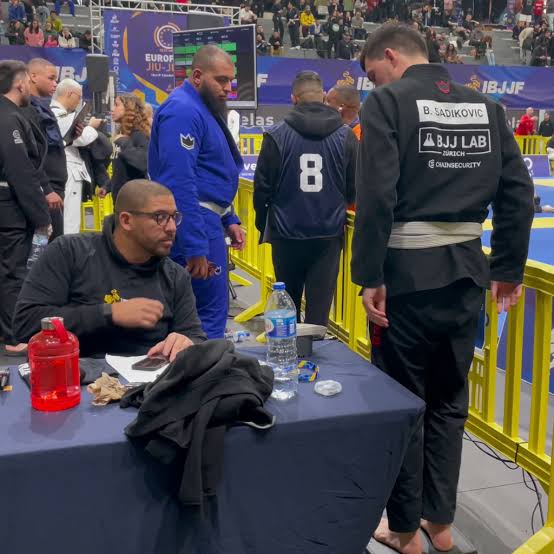
Two years ago I competed at a regional grappling championship. I made 66 kg. I got there by losing 7 kg over the course of a month, and by spending the final week barely drinking water and eating almost nothing while I kept training.
I made the weight. That was the only thing that went right.
By the last few days I was running on empty and moving through sessions like a zombie — no energy, no sharpness, just going through the motions because the training was on the schedule. I tore my biceps that week. Not in a match, not under some freak load: in an ordinary session, in a body that had nothing left to absorb it.
I still competed. I weighed in, got some fluid and food back into me, and recovered enough to function. I won one match and lost another. On paper, an unremarkable day.
Off paper, that tear kept coming back. I was out for six months with repeated setbacks. Six months of not training, for one regional tournament where I went one and one.
The cut didn’t cost me a match. It cost me half a year.
What I do differently now. I still compete at 65 kg, but I get there differently. I don’t cut water any more, or barely. The weight comes off slowly through how I eat, over enough weeks that training doesn’t suffer, and I arrive at fight week needing very little.
And when there isn’t enough margin — when the gap is too big to close without doing something stupid — I move up. My next competition is at Nègrepelisse, and I’m competing at 70 kg for exactly that reason. That decision used to feel like backing down. It isn’t. Competing at 70 fresh is a better version of me than competing at 65 wrecked, and I have six lost months as evidence.
Weight management vs weight cutting
Most athletes use the two terms interchangeably, and that confusion is the root of the problem.
Weight management is what you do over weeks and months: eating in a way that brings your body closer to your competition weight while you keep training hard. It costs you almost nothing in performance, because your body has time to adapt.
Weight cutting, in the narrow sense, is what happens in the final days: manipulating fluid and gut content to drop the last bit before the scale. It costs you a lot, and the more of it you do, the more it costs.
A well-planned season is mostly the first and barely any of the second. A badly planned one is a panic in the last 72 hours — which is exactly what mine was.
How much weight can you actually lose?
There is no single number that fits every athlete, but there are useful reference points.
Gradual loss. Sports nutrition guidance generally puts sustainable fat loss at roughly 0.5-1% of bodyweight per week. Go faster and you start losing muscle and strength along with the fat. Over an eight-week block, that adds up to a meaningful amount of weight without touching your hydration.
Acute loss. Dehydration is where the danger lives. Research on combat athletes consistently links fluid losses above roughly 2-3% of bodyweight to measurable drops in strength, endurance, reaction time and cognitive function. Above that, risks escalate: heat illness, kidney strain, cardiovascular stress. Deaths in collegiate wrestling in the 1990s led directly to the weight certification rules most federations now enforce.
What this means in practice. If you need to lose more than a few percent of your bodyweight in the final week, you are not cutting weight, you are competing injured. The fix is upstream, not in fight week.
The week-by-week plan
8 weeks out: set the target
Choose your class honestly. The right class is the one where you are strong, not the one where you are lightest. If reaching it means gutting a large percentage of your bodyweight, you are giving away more in performance than you gain in size.
Check your federation’s rules now, not later. Most bodies set a minimum body fat percentage, a maximum weekly loss rate, and a certification process you cannot skip. How Wrestling Weight Certification Works
Weigh yourself at the same time each day, under the same conditions, and track it. One weigh-in tells you nothing; a two-week trend tells you everything.
6-8 weeks out: nutrition does the work
This is where the weight comes off, and it should come off slowly enough that training quality holds.
Keep protein high. It protects muscle when you are eating less, and it keeps you fuller. Keep carbohydrate around training sessions, because that is what fuels hard practice; cutting carbs to nothing is the fastest way to have a terrible week on the mat.
What gets cut is mostly the stuff around the edges: liquid calories, second helpings, late-night eating, the snacks you don’t register. Most athletes find several hundred calories a day there without ever feeling deprived.
Do not cut fluids. Not now, not at any point in this phase.
4 weeks out: checkpoint
By now you should be within a few percent of your class. If you are not, the honest move is to reassess the class rather than to plan a bigger cut.
This is also where you find out how your training is holding up. If your lifts are collapsing, you are constantly cold, sleeping badly or getting sick, you are losing weight too fast. Slow it down.
This is the checkpoint I ignored. A month out I was still 7 kg away and I decided to make it work anyway. That decision — not the final week — is where the injury started.
2 weeks out: fine-tuning, not panic
Your weight should now be close enough that the remaining gap is small. Keep eating and training normally. Resist the urge to add extra conditioning to burn off the difference; you are already training hard, and the added fatigue costs more than it returns.
Plan your weigh-in logistics: what time, same-day or day-before, where, and what you will eat afterwards. Same-Day vs Day-Before Weigh-Ins
Fight week: low residue, not dehydration
In the final days, small amounts of weight can be managed by reducing what is sitting in your digestive system: lower fibre, smaller and more frequent meals, less salt, fewer bulky foods. Uncomfortable, but not dangerous — and a very different thing from removing fluid.
Keep drinking. This is where most athletes get it wrong, and it is where I got it wrong: restricting water days out means arriving at the competition having been dehydrated for the better part of a week.
If the gap is still large in fight week, the responsible decision is to move up a class or withdraw. That is not a failure. It is the decision experienced coaches make for their athletes, and it is the one I now make for myself.
Weigh-in day
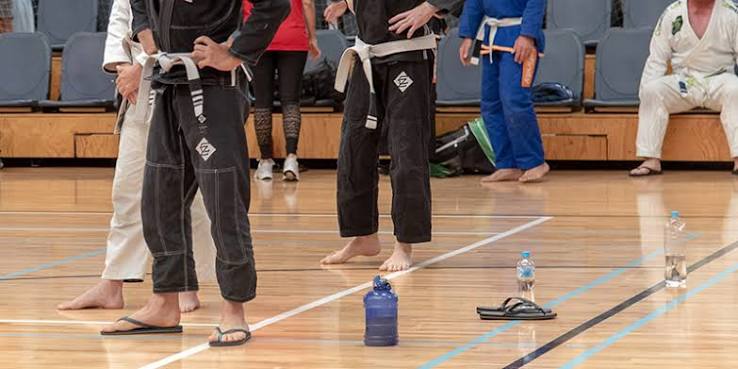
My own routine is deliberately boring. I go to the venue, weigh in, and then start putting things back in, slowly.
Water first, in small amounts rather than all at once. Then food, also in small amounts: fast-absorbing carbohydrate, usually rice. Nothing heavy, nothing I haven’t eaten before, and nothing rushed.
The temptation after stepping off the scale is to drink half a litre in one go and eat everything in the bag. Don’t. A stomach that has been on restricted food for days handles a steady drip far better than a flood, and competing on a full, unsettled gut is its own kind of miserable.
Every hour between the weigh-in and your first match is an hour you can use to recover — so start immediately, and keep it gradual.
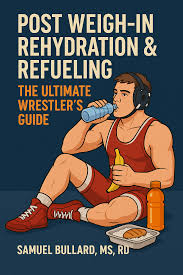
Refuelling after the weigh-in
This is the half of the process almost nobody plans, and it decides how you actually perform.
The order matters: fluid with electrolytes first, then easily digested carbohydrate, then a proper meal once your stomach has settled. What you don’t do is eat a large amount all at once — a stomach that has been running on low-residue food for days will not thank you, and there are few worse feelings than competing on a full, unhappy gut.
How much time you have changes everything. With 24 hours you can recover substantially. With one hour, you are managing damage — which is another argument for not needing much recovery in the first place.
Full detail here: How to Rehydrate After a Weigh-In.
Warning signs: stop and get help
Stop and speak to a medical professional if you experience dizziness or fainting, confusion or trouble concentrating, a racing heart at rest, cramping that will not resolve, very dark urine or no urination, nausea and vomiting, or chest pain. These are not things to push through.
Worth saying plainly too: if the way you think about food, the scale or your body has started following you outside the season, that is worth talking to someone about. Weight-class sport puts a lot of athletes in a difficult relationship with eating, and it is far more common than the locker room admits.
For young athletes and their parents
School-age athletes are still growing, and the margins are much tighter. Federations set minimum body fat levels and maximum weekly loss rates for exactly this reason, and hydration testing exists because it was needed.
If you are a parent reading this because your child has come home talking about cutting weight, the conversation to have is with their coach and their doctor, not the internet. We have written a separate guide for that: Youth Wrestling Weight Management: A Guide for Parents.
The five mistakes that cost most athletes their season
Leaving it to fight week. Every problem in this article traces back to this one.
Choosing the class by ego. Being the biggest athlete in a class you arrive at depleted is not an advantage.
Cutting fluid early. Restricting water days out gives you a miserable week of training and no real benefit. It is also how you end up injured in an ordinary session.
Skipping the refuel plan. Making weight is half the job. Competing well an hour later is the other half.
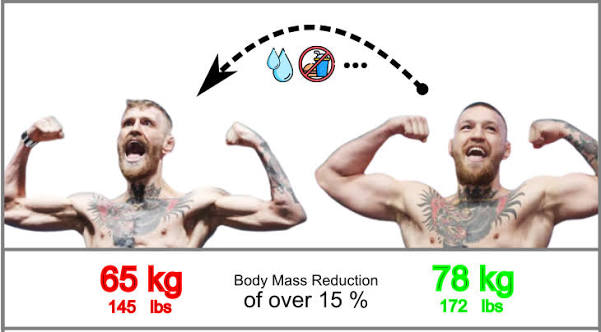
Copying a professional’s cut. Elite fighters cut under medical supervision, with 24- or 36-hour recovery windows and a team managing it. Very little of that transfers to a regional tournament with same-day weigh-ins.
The mistake I made: I treated a month-long cut as a fight-week problem and tried to close the gap by removing water. The weight came off. So did everything that made me able to compete. If the gap in fight week still looks big, that is the signal to move up a class — not the signal to stop drinking.
Frequently asked questions
How much weight can I cut in a week?
Safely, very little through fluid loss, and only a fraction of a percent through actual fat loss. If the answer you need is a large number, the plan went wrong weeks ago.
Are sweat suits and saunas safe?
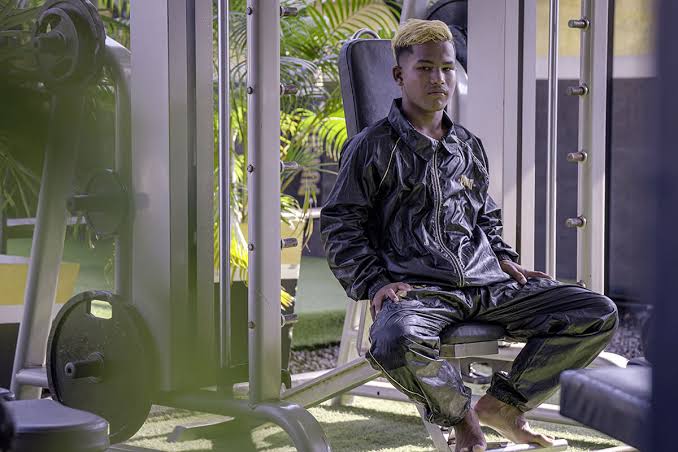
They work by dehydrating you, which is precisely the mechanism that causes harm. Many federations ban them outright, and they were involved in the deaths that led to today’s rules. We don’t recommend them.
Can I cut weight and get stronger at the same time?
Gradually, yes — especially if you are newer to structured training. Rapidly, no. See How to Build Muscle Without Moving Up a Weight Class.
What if I miss weight?
It depends on the federation and the event; some allow a grace period, many do not. Know the rule before the day, not on it.
Is it weak to move up a class?
No. I moved up for my next competition because the margin wasn’t there, and it is the better decision every time. The alternative is what cost me six months.
Written by Victor Vicente, national-level competitor in Spain.
Last updated: 25 September 2026