How to Rehydrate After a Weigh-In: A Step-by-Step Refuel Plan
After the scale, drink first and eat second. Start with a big drink that contains sodium straight away, keep sipping every 15-20 minutes, and over the whole window aim to drink 125-150% of the fluid you lost. Add easily digested carbohydrate, and keep fiber and fat low until you have competed. How far you take each step depends on one number: the hours between your weigh-in and your first match. And no refuel fully undoes a big cut. A 2026 review of 40 studies found that athletes reliably win back the weight, but not necessarily the hydration.
Before you read on. This is general information from a competitive athlete, not medical advice. Rapid weight loss and dehydration carry real risks, including death. Your federation’s rules and your doctor’s guidance come before anything written here. If you are under 18, do not attempt any of this without your coach, your parents and a physician involved. See our Medical Disclaimer.
Why the refuel matters, and what it can’t fix
The refuel is the one part of making weight you can get almost entirely right. It is still damage control, not a reset button.
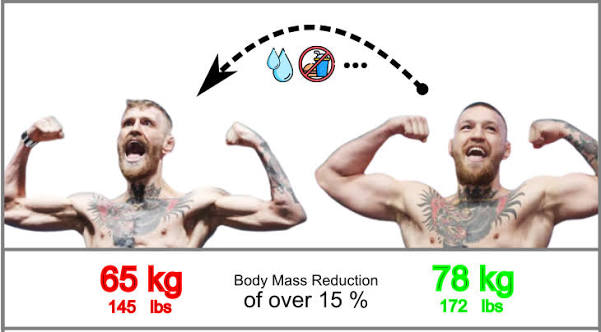
The largest look at the evidence so far, a 2026 meta-analysis of 40 studies on combat athletes, found that they put back an average of 6.2% of body mass after weighing in, about 3.7 kg (8 lb). But the weight and the hydration did not move together. At the official weigh-in, the pooled urine specific gravity was 1.029, well past the 1.020 line that marks dehydration, and the authors warn that winning back the weight should not be read as being rehydrated or ready to compete (Sun et al., Frontiers in Nutrition, 2026).
The same review found that no single refuel protocol has been proven better than the others. The plan below follows the consensus of sports nutritionists who work with fighters. It is best practice, not a secret formula, and it works far better after a small cut than a big one.
Two things follow from that:
- The refuel is planned before the cut, not after. If you need a miracle refuel, the cut was too big. Check your numbers first with our weight cut calculator.
- Regaining a lot is not the goal. The review’s authors point out that chasing a big regain number can push athletes into bigger cuts. The goal is to step on the mat hydrated, fueled and comfortable, whatever the scale says.
Step 0: Know your window
Everything below scales with one number: the time between stepping off the scale and stepping on the mat. Find it in the event rules before fight week, not on the day.
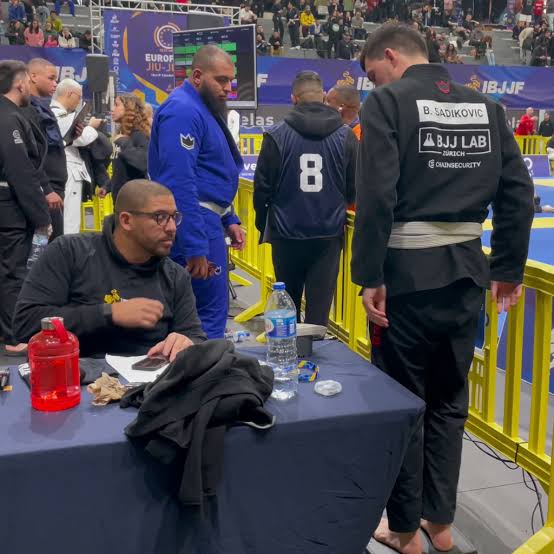
In Olympic combat sports that window runs from about 3 to 24 hours, and in professional fighting it can exceed 30 hours (Reale, GSSI). College wrestling weigh-ins happen no more than two hours before competition (CDC MMWR), and most BJJ events weigh you in, in your gi, right before your first match (our BJJ guide).
| Time to your first match | Where you’ll see it | What the refuel can do | Your priority |
|---|---|---|---|
| Under 2 hours | Most BJJ events, college wrestling | Very little. You compete in roughly the state you weighed in. | A few big sips of a sodium drink and some fast carbohydrate. Keep the stomach light. |
| 3-12 hours | Morning-of weigh-ins | Some fluid and fuel, not a full recovery | Large sodium drink straight away, keep drinking, small low-fiber snacks |
| 12-24 hours | Evening-before weigh-ins | Most of a moderate cut can come back | Drink and eat the bulk of it before you sleep; normal breakfast the next morning |
| More than 24 hours | Professional MMA and boxing | The most time, and the biggest temptation | Same plan, spread out. Don’t treat the window as permission to cut more. |
That last row matters. Athletes with longer windows routinely cut far more, as we covered in weight cutting for MMA. A long window is a chance to recover from a sensible cut, not an invitation to a bigger one.
Step 1: The first hour is fluid with sodium
Have the drink in your bag before you step on the scale. The first hour is the most valuable part of the window, and you don’t want to spend it in a queue at a vending machine.
How to drink it. Take a large drink of 600-900 ml (20-30 oz) straight after the weigh-in, then keep drinking smaller amounts every 15-20 minutes while your stomach is comfortable. Starting big keeps your stomach full, which actually speeds up how fast fluid empties into your gut (Reale, GSSI).
Why sodium. When you down large amounts of plain water on its own, your blood gets diluted and your kidneys respond by making more urine, so a lot of it goes straight through you. Sodium in the drink limits that, which is why salty fluids are retained better. The effect matters most when you are drinking fluids by themselves. Once you are eating food or drinking milk alongside, the extra sodium in the drink adds little (McCubbin, 2025).
How much sodium. If you are rehydrating with drinks alone, sports nutrition guidance puts the target at 50 mmol of sodium per liter or more, which is about 1,150 mg per liter (Reale, GSSI). Above roughly 120 mg per 100 ml, most people find a drink unpleasantly salty, so 100-125 mg per 100 ml is a workable compromise between taste and retention (McCubbin, 2025).
In label terms: look for roughly 1,000-1,200 mg of sodium per liter, or 500-600 mg in a 500 ml (17 oz) bottle. Divide the sodium per serving by the serving size and you will see quickly that most standard sports drinks fall short.
| Option | Sodium | Good for | Watch out for |
|---|---|---|---|
| Oral rehydration solution (sachets or ready-made, sold in pharmacies) | About 50-90 mmol/L (1,150-2,070 mg/L) | Fastest rehydration when you are mostly drinking | Salty taste; little carbohydrate |
| Standard sports drink | Usually under 30 mmol/L (under 690 mg/L) | Fluid plus carbohydrate | Too little sodium on its own for a big deficit |
| Sports drink plus salty snack (pretzels, crackers) | Depends on the snack | Fluid, carbohydrate and sodium together | Food slows how fast the fluid empties from your stomach |
| Plain water | None | Drinking alongside meals | In big amounts on its own, much of it comes straight back out |
Sodium figures for oral rehydration solutions and sports drinks come from Reale, GSSI.
One nuance. If your weight came off mainly from drinking less rather than from sweating, you lost far fewer electrolytes, and lower-sodium fluids are retained well enough (Reale, GSSI). The salty drink matters most after a sweat-based cut, which is one more reason not to do one.
Step 2: Work out how much to drink in total
The target over the whole window is 125-150% of the fluid you lost. You need more than 100% because part of what you drink keeps leaving as urine while you rehydrate (Reale, GSSI).
The catch is knowing what you actually lost. Only count the weight that came off in the last day or two from drinking less or sweating. Weight from weeks of dieting is not a fluid deficit, and neither is the roughly 1.5% that comes from emptying your gut with a low-fiber diet. That is why the scale overstates the deficit after a mixed cut (Reale, GSSI).
| Fluid lost in the last 24-48 hours | Total to drink over the window (125-150%) |
|---|---|
| 1 kg (2.2 lb) | 1.25-1.5 L (42-51 oz) |
| 1.5 kg (3.3 lb) | 1.9-2.25 L (63-76 oz) |
| 2 kg (4.4 lb) | 2.5-3 L (85-101 oz) |
Spread it across the window, front-loaded into the first hour or two. In a short window you won’t reach the total, and you shouldn’t force it: sloshing liquid in your stomach is its own performance problem. That is the strongest argument for a small cut.
Don’t go past the target either. Drinking far beyond your losses does not make you more hydrated, and large volumes of plain water on their own can dilute your blood sodium (McCubbin, 2025).
How to tell it is working: you start urinating normally again and your urine turns from dark to pale. Those are rough signs, not a test, but they tell you more than the scale does.
Step 3: Carbohydrate, then a real meal
Once fluid is going in, fuel is next. Grappling and striking both run on repeated high-intensity efforts, and those run on glycogen, the carbohydrate stored in your muscles. If you cut carbohydrate to make weight, refilling it is part of the job.
How much. After a weigh-in where glycogen was depleted, the guidance is 5-10 g of carbohydrate per kg of body weight across the recovery window. Aim for the low end when the window is short or your stomach is sensitive, and the high end when you have a night to recover. In the 2-3 hours before you compete, about 1 g per kg is a useful target (Reale, GSSI). For a 70 kg (154 lb) athlete, that pre-match figure is roughly 70 g: a plain bagel with honey and a banana gets you there.
If you didn’t cut carbohydrate before the weigh-in, you don’t need the big numbers. Eat your normal pre-competition meal.
The first 30-60 minutes. Liquid and easy carbohydrate work best here: sports drinks, gels, chews, even candy. Don’t make your drinks too concentrated, though. Fluids above about 10% carbohydrate empty from the stomach more slowly and can upset it, so early on you may have to choose between rehydrating fast and refueling fast (Reale, GSSI). If you have to choose, fluid comes first.
From the second hour. Start on solid food: high in carbohydrate, low in fiber, low in fat, and salty if you like. Salty food also helps you keep the water you are drinking, so plain water alongside a salty meal works fine (Reale, GSSI).
What to leave until after you compete. Bringing fiber back suddenly, or eating a lot of fat, slows how fast food leaves your stomach and can cause stomach trouble (Reale, GSSI). That is a bad trade before a match.
| Good after the weigh-in | Leave until after you compete |
|---|---|
| White rice, plain pasta, white bread, bagels | Salads, beans, lentils, whole-grain bread, bran cereal |
| Bananas, honey, jam, rice cakes | Burgers, fries, pizza, anything fried |
| Pretzels, crackers, salted rice | Large fatty cuts of meat, big portions of nuts or cheese |
| Sports drinks, gels, chews, sweetened milk | Anything you have never eaten before a match |
Rough carbohydrate values to plan with: a medium banana has about 27 g, a plain bagel about 50 g, a cup of cooked white rice about 45 g, and a 500 ml (17 oz) bottle of a standard 6% sports drink about 30 g.
Three refuel plans by weigh-in format
The steps are the same in every format. What changes is how much of each you can fit in.
Same-day weigh-in (under about 2 hours)
This is most BJJ and college wrestling. The honest plan is that you barely refuel, so the cut has to be small enough not to need it.
- Drink normally right up to the weigh-in if your margin allows it.
- Straight after: as much of a sodium drink as sits comfortably, plus a little fast carbohydrate such as a gel, a banana or a few chews.
- Warm up properly. A light stomach and a real warm-up beat a full stomach and a rushed one.
- Between matches, keep sipping and nibbling small amounts.
If your stomach won’t take food, rinsing your mouth with a sports drink for about 10 seconds and spitting it out may still help performance when carbohydrate is low (Reale, GSSI).
Morning-of weigh-in (about 3-12 hours)
- Hour 0: 600-900 ml (20-30 oz) of a sodium drink, plus easy carbohydrate.
- Every 15-20 minutes: keep drinking while your stomach is comfortable.
- From hour 1-2: a low-fiber, salty, carbohydrate-based meal (rice, bread, pasta, pretzels).
- 2-3 hours before your first match: about 1 g of carbohydrate per kg of body weight, then switch from recovery mode to competition mode. In the final hour, small sips only.
Evening-before weigh-in (about 12-24 hours)
The aim is to finish rehydrating and refueling before you go to sleep, so the morning is about competing, not catching up (Reale, GSSI).
- Straight after the weigh-in: the same sodium drink and easy carbohydrate as above.
- Dinner: a large, low-fiber, carbohydrate-heavy meal, salted to taste.
- Until bedtime: keep drinking toward your 125-150% total.
- Morning: your normal pre-competition breakfast 2-3 hours before you compete.
Check the rules for a second weigh-in. Some sports, judo and taekwondo among them, have added a morning check on competition day to limit how much athletes regain overnight (ACSM Expert Consensus Statement). If yours does, plan the evening around it.
What not to do after the scale
- Don’t get an IV drip. Under the WADA Prohibited List, IV infusions of more than 100 ml in 12 hours are banned at all times, in and out of competition, unless you have a medical exemption, even when what’s in the bag is just saline (USADA). NCAA wrestling has banned IV rehydration between weigh-in and competition since 1998 (CDC MMWR), and ONE Championship bans it too (Sherdog). If you feel you need one, you need a doctor, not a refuel.
- Don’t flood yourself with plain water. Gallons of water on an empty stomach mostly end up as urine and can dilute your blood sodium (McCubbin, 2025).
- Don’t overdo the salt either. Salt tablets swallowed with a little water, or drinks saltier than your own blood, pull water into your gut and cause stomach trouble (McCubbin, 2025). Sodium works with fluid, not instead of it.
- Don’t celebrate with a feast. A burger, fries and a milkshake is the meal most people crave after the scale, and the wrong one: fat and fiber slow everything down (Reale, GSSI).
- Don’t try anything new. Competition day is not the moment for a new drink, a new supplement or a food you have never eaten before a hard session. Sports nutritionists recommend familiar foods that you have tested ahead of time (Reale, GSSI).
What you should do instead is rehearse. Run your refuel once after a hard training session in the weeks before the event: the same drink, the same food, the same timing. Then you know how your stomach reacts before it matters.
What I would do differently
Two years ago, when I cut to 66 kg for a regional grappling championship, my refuel was improvised. I had spent the last week barely drinking and eating almost nothing. After the weigh-in I got some water and food back in, and I recovered enough to function: enough to win one match and lose one. Not enough to compete as the athlete I had trained to be.
Looking back, the refuel was the smaller mistake. No drink, however well planned, was going to undo a week without water on top of a month of dieting too fast. What this article describes works when the cut was small. When the cut is big, it only decides how bad the day is.
So the order I follow now is the reverse of what I did then. First, choose a class I can reach without cutting water, and move up when the margin isn’t there. Second, plan the refuel in advance and test it in training. The refuel is the last line of defense, not the plan.
Warning signs
Stop and get medical help if you experience dizziness or fainting, confusion or trouble concentrating, a racing heart at rest, cramping that won’t resolve, no urine at all or very dark urine that isn’t clearing, nausea and vomiting, or chest pain. If you can’t keep fluids down, you can’t rehydrate by mouth, and you should not compete.
One warning runs the other way. If you have been drinking large volumes of plain water and develop a headache, nausea or confusion, that can be low blood sodium rather than dehydration, and more water makes it worse. Get help rather than guessing.
And if the cycle of cutting and refilling has started to shape how you think about food or the scale outside competition, that is worth talking to someone about.
Frequently asked questions
How long does it take to rehydrate after a weigh-in? Longer than it takes the scale. With a night to recover, most of a moderate cut can come back; within an hour or two, the recovery is partial at best. Elite kickboxers who regained more weight than they had cut were still mostly hypohydrated on competition day (BMC Sports Science, Medicine and Rehabilitation, 2026).
What is the best drink after a weigh-in? One with roughly 1,000-1,200 mg of sodium per liter, some carbohydrate, and that you have already tested in training. An oral rehydration solution, or a sports drink with salty snacks, both fit (Reale, GSSI).
Are oral rehydration solutions better than sports drinks? For rehydration, they carry more sodium, so you keep more of what you drink. For fuel, sports drinks carry more carbohydrate. Many fighters use both, or pair the sports drink with salty food.
Should I drink plain water after weighing in? With food, yes: plain water alongside a meal is retained about as well as other drinks. On its own and in big amounts, a lot of it goes straight through you (McCubbin, 2025).
How much should I eat after weighing in? If you cut carbohydrate, aim for 5-10 g per kg of body weight across the window, at the lower end for short windows, and about 1 g per kg in the 2-3 hours before you compete (Reale, GSSI). If you didn’t, eat your normal pre-competition meal.
Can I use an IV after the weigh-in? No. IV infusions over 100 ml in 12 hours are prohibited under WADA rules without a medical exemption (USADA), and NCAA wrestling and ONE Championship ban IV rehydration outright.
If I regain more weight, am I more recovered? Not necessarily. Regained weight includes food and fluid sitting in your gut, and the 2026 meta-analysis found that weight regain should not be read as complete rehydration or readiness (Sun et al., 2026).
Written by Victor Vicente, national-level competitor in Spain. Last updated: 13 October 2026
Sources
- Effects of rehydration and nutritional recovery strategies after rapid weight loss on body mass recovery, hydration status, and performance in combat sports athletes: a systematic review and meta-analysis, Frontiers in Nutrition (2026)
- Acute Weight Management in Combat Sports: Pre Weigh-In Weight Loss, Post Weigh-In Recovery and Competition Nutrition Strategies, Gatorade Sports Science Institute, Sports Science Exchange #183 (2018)
- Sodium intake for athletes before, during and after exercise: review and recommendations, Performance Nutrition (2025)
- ACSM Expert Consensus Statement on Weight Loss in Weight-Category Sports, Current Sports Medicine Reports (2021)
- Acute weight cycling and hydration status in elite kickboxers: a repeated-measures field study, BMC Sports Science, Medicine and Rehabilitation (2026)
- Is it prohibited for athletes to use IV infusions for rehydration and recovery?, USADA
- Hyperthermia and Dehydration-Related Deaths Associated with Intentional Rapid Weight Loss in Three Collegiate Wrestlers, CDC MMWR (1998)
- One Championship Adopts New Weigh-In Policy Following Recent Fighter Death, Sherdog (2015)