How to Make Weight for a BJJ Tournament Without Losing Strength
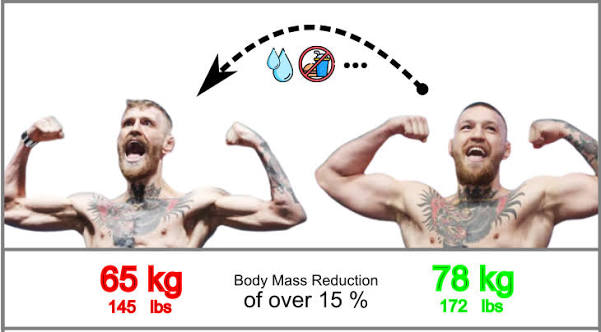
Quick answer: In BJJ you usually have a same-day weigh-in and you compete within a couple of hours, sometimes minutes. That single fact should change everything about how you approach the weight. There is no recovery window to rescue you, so the cut has to be small enough that you step off the scale ready to roll. Aim to be within 1-2 kg of your class a week out, and let nutrition, not dehydration, do the work.
Before you read on. This is general information from a competitive athlete, not medical advice. Rapid weight loss and dehydration carry real risks. Your federation’s rules and your doctor’s guidance come before anything written here. If you are under 18, do not attempt any of this without your coach, your parents and a physician involved. See our Medical Disclaimer.
Why BJJ is not wrestling or MMA
Athletes often copy weight-cutting protocols across combat sports without noticing that the rules underneath them are completely different. In BJJ, three things make big cuts a bad idea.
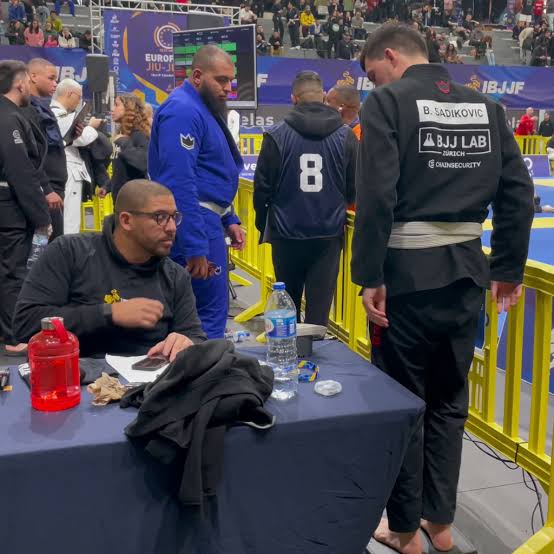
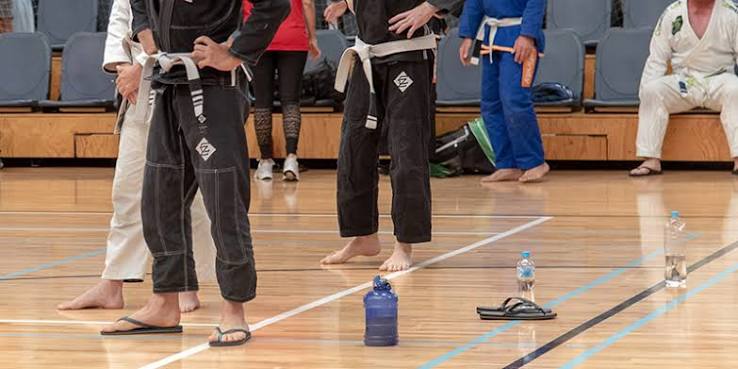
Same-day weigh-ins are the norm. Under IBJJF rules you weigh in on the day, in your gi, and you may be called to the mat shortly afterwards. There is no 24-hour window to rehydrate and refuel. Whatever state you’re in on the scale is roughly the state you’ll compete in.
You weigh in wearing your gi. That is typically 1-2 kg of fabric that counts towards your number, and a wet or heavy gi counts more. Your walking-around weight and your competition weight are separated by more than you think.
Grappling punishes depletion more than most sports. A BJJ match is a long isometric grind: grip fighting, frames, bridges, scrambles. Grip endurance in particular falls off a cliff when you’re dehydrated, and losing your grips in a gi tournament means losing control of the match.
Weight classes and weigh-in rules by federation
The gi weighs more than you’d like
Before you plan anything, weigh your competition gi. Not any gi — the one you’ll compete in.
A lightweight competition gi and a heavy double-weave can differ by close to a kilo, and that kilo is the difference between comfortable and desperate. If you’re consistently fighting the scale, buying a lighter competition gi is cheaper, faster and safer than cutting another kilo off your body. Best BJJ Gi for Beginners
Weigh it dry, and weigh it again after a hard roll. If you’re being weighed after warming up, that difference is real.
What a bad cut costs you: mine
Two years ago I competed at a regional grappling championship at 66 kg. I lost 7 kg over the month before it, and I spent the final week barely drinking water and eating almost nothing while I kept training.
I made the weight. Everything after that went wrong.
By competition morning I had nothing. Not «tired» — empty. I’d been moving through training that week like a zombie, and the feeling didn’t lift once I was on the mat. I got some water and food back in after weighing in and recovered enough to function, and I did win a match. But I wasn’t the athlete I’d spent months training to be. I was a lighter, slower, weaker version of him, competing on the strength I had left rather than the strength I’d built.
The real bill came later. I’d torn my biceps in an ordinary training session that week — not in a match, not under a freak load, just a body with nothing left to absorb it. That tear kept coming back, and I ended up out for six months.
Six months of lost training, for one regional tournament where I went one and one.
What I do differently now. I don’t cut water any more, or barely. The weight comes off slowly through how I eat, over enough weeks that training doesn’t suffer, and I arrive at the competition needing very little. And when the margin isn’t there, I move up: my next competition is at Nègrepelisse and I’m entering a division higher for exactly that reason.
In a same-day-weigh-in sport, that decision is even easier than it was for me. You don’t get a recovery window to hide a bad cut behind.
An 8-week approach
Weeks 8-5: pick the class and eat for it
Decide honestly which class you belong in. In BJJ the advantage of being the bigger athlete in a division is smaller than people assume, because so much of the sport is leverage, timing and grip rather than raw mass. Arriving strong beats arriving heavy.
Lose weight the slow way: protein kept high, carbohydrate kept around training so your rolls don’t fall apart, and calories trimmed from the edges rather than from your fuel. Roughly 0.5-1% of bodyweight per week is the usual guidance for losing fat without losing strength with it.
Do not touch your fluid intake in this phase. Not at all.
Weeks 4-2: checkpoint and adjust
By four weeks out you want to be within 1-2 kg of your class including the gi. That last part is the one people forget.
If you’re further away than that, the honest options are to slow down and accept a later target, or to move up. Deciding now is comfortable. Deciding in fight week is not — I know, because a month out from that championship I was still 7 kg away and chose to make it work anyway. That decision, not the final week, is where it went wrong.
Watch your training quality. If your grips are going early in rolls, if you’re getting sick, sleeping badly or feeling cold all the time, you’re losing too fast.
Fight week: small adjustments only
In the last few days, reduce what’s sitting in your digestive system rather than what’s in your bloodstream: less fibre, smaller and more frequent meals, less salt, fewer bulky foods. That’s an uncomfortable few days, not a dangerous one.
Keep drinking normally. In a same-day-weigh-in sport, arriving dehydrated is arriving beaten.
If the gap is still more than a kilo or so with the gi on, enter the class above. In BJJ that decision costs you very little and saves you a great deal.
Competition morning
Weigh in, then start putting things back in gradually: water in small amounts first, then easily digested carbohydrate. Small and steady beats a flood, particularly when you might be called to the mat soon.
Then warm up properly. A short, sharp warm-up matters more than usual when you’ve been eating light, because you’re asking a slightly depleted body to go from zero to a competitive scramble.
How to Rehydrate After a Weigh-In
Strength and grip: what actually suffers
The reason this article insists on small cuts isn’t caution for its own sake. It’s what dehydration does to the specific qualities BJJ demands.
Research on combat athletes consistently links fluid losses above roughly 2-3% of bodyweight to measurable drops in strength, endurance, reaction time and concentration. In a sport decided by who can hold a grip thirty seconds longer, and who still has the head to recognise a passing sequence in the fifth minute, those are the exact qualities you can’t afford to trade.
Add the absence of a recovery window and the maths is simple: a cut that would be survivable in wrestling, with a day to recover, is a cut that shows up in your first match in BJJ.
For white and blue belts especially
If you’re new to competing, don’t cut at all. Enter the division your body already fits and spend the preparation on your game instead.
Cutting weight is a skill with a cost, and at the early stages of competing it buys you almost nothing while costing you the chance to find out how you actually perform. Most people who regret their first tournament regret the cut, not the division.
Common mistakes
Forgetting the gi. Planning to your naked weight and discovering the extra kilo on the day.
Copying an MMA cut. Professional MMA cuts assume a 24- or 36-hour recovery window and a team managing it. You have neither.
Cutting fluid in a same-day-weigh-in sport. There’s no time to fix it. You compete in whatever state you weighed in.
Eating a huge meal off the scale. Your first match may be closer than you think, and rolling on a full stomach is its own kind of misery.
Cutting to make a division you don’t need. Absolute divisions exist, and being smaller in your class matters less in BJJ than in almost any other combat sport.
Warning signs: stop and get help
Stop and speak to a medical professional if you experience dizziness or fainting, confusion or trouble concentrating, a racing heart at rest, cramping that won’t resolve, very dark urine or no urination, nausea and vomiting, or chest pain.
And if the way you think about food, the scale or your body has started following you outside competition season, that’s worth talking to someone about. It’s far more common in weight-class sport than the gym admits.
Frequently asked questions
How much can I cut for a BJJ tournament?
Less than you think, and less than in most combat sports, because there’s no recovery window. If the answer needs to be a large number, enter the class above.
Do I weigh in with the gi on?
Under IBJJF rules, yes, and it must be a legal gi. Rules vary by promotion, so check the specific event.
What if I miss weight?
It depends on the event. Many promotions disqualify without a second attempt, and some offer no grace period at all. Know the rule before you enter.
Should I compete in the absolute division too?
If you’ve cut hard to make your class, no. You’ll be facing bigger athletes with less in the tank than they have.
Is same-day weigh-in better or worse than day-before?
For your health, same-day is generally safer, because it makes large cuts impractical. For comfort, it’s harder. Same-Day vs Day-Before Weigh-Ins
Written by Victor Vicente, national-level competitor in Spain.
Last updated: 28 September 2026